

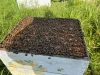
In response to increased dengue virus activity, Hillsborough County is conducting additional treatments and sharing tips to help safeguard honeybees and pollinators
With dengue virus activity detected in mosquito traps across Hillsborough, the County's Mosquito Management Services team has increased mosquito treatment missions to help reduce mosquito populations and protect public health.
Treatments are being conducted using both ground-based equipment and helicopters.
The increased mosquito management activity may raise questions for residents who keep honeybees and other pollinators. Hillsborough County follows mosquito management standards established by the state of Florida and works to balance the need for mosquito control with steps that can help protect bee colonies.
Residential beekeepers can take several precautions before scheduled treatments to help safeguard their hives.
Know when mosquito treatments occur
Mosquito treatments targeting adult mosquitoes are generally conducted after sunset and completed before sunrise.
This timing helps limit exposure to foraging honeybees because many mosquito species are most active during the evening and early morning hours. It also allows mosquito control crews to work when winds are typically calmer.
However, as County officials work to stop the spread of dengue fever, residents may notice mosquito treatments by helicopter both day and night.
Hillsborough County offers mosquito spray notifications so registered beekeepers and other residents can stay informed about upcoming treatments. The County also provides a map showing planned and recently completed mosquito treatments.
Knowing when treatments are scheduled provides beekeepers an opportunity to take precautions before a mosquito control vehicle or aircraft enters their area.
Tips for protecting backyard hives
The University of Florida Institute of Food and Agricultural Sciences (UF/IFAS) and the Florida Department of Agriculture and Consumer Services offer guidance for beekeepers working alongside mosquito management programs.
Consider a temporary plywood cover
One option for backyard beekeepers is to place a piece of plywood over the top of the hive, extending beyond the sides of the hive to create a temporary "spray shadow."
UF/IFAS guidance recommends plywood extending roughly one foot beyond the hive on all sides. Beekeepers should not completely wrap or seal their hives in plastic or other coverings.
Doing so can trap heat and create conditions that can harm a colony. Instead, a plywood cover can provide overhead protection while allowing the hive to remain properly ventilated.
Give bees additional room
UF/IFAS guidance also recommends adding an empty super to the hive before treatment. This can provide additional space for bees that might otherwise cluster outside the hive.
Place hives strategically
When possible, beekeepers should keep hives at least 300 feet from roads, with entrances facing away from the road. The typical swath of a ground adult mosquito treatment is approximately 300 feet.
Beekeepers should also maintain records of hive inspections and communicate with local mosquito control representatives about hive locations and concerns.

Managing mosquito populations to protect public health
Hillsborough County manages mosquito populations to protect public health and welfare. Mosquito Control's primary strategies of population control are to eliminate breeding habitat (areas of standing, stagnant water) and reduce mosquito development through larval control.
With adult mosquito populations posing a public health risk, the County is using insecticides to target adult mosquitoes (adulticide) in and around areas where surveillance data demonstrates an increase in mosquito populations.
Residents can help by eliminating mosquito breeding sites
Everyone can play a role in reducing mosquito populations around their home. One of the most effective ways to prevent breeding is by eliminating standing water where mosquitoes can lay eggs.
Residents should regularly:
- Drain water from buckets, garbage cans, gutters, pool covers, and other containers that may hold stagnant water
- Empty and clean birdbaths and pet water bowls at least twice a week
- Discard old tires, bottles, pots, and other items that can collect rainwater
- Keep swimming pools properly maintained
- Cover boats and vehicles so they don't collect rainwater

By eliminating breeding sites around homes, residents can help reduce the number of mosquitoes in their neighborhoods and reduce the need for additional treatments.
Working together to protect public health and pollinators
Hillsborough County understands that mosquito control and beekeepers share the important goal of maintaining a healthy community. That's why members of the County's Mosquito Management Services team have taken steps to work with beekeepers and prioritize the health of pollinators.
Team members attend "beekeeper college," formal apiculture training events, and certificate programs to maintain their knowledge about honeybee biology, hive management, and sustainable beekeeping practices.
The County also maintains hives at its Mosquito Management Services office, giving staff hands-on experience with honeybees and a firsthand look at beekeeping and hive management.
This experience helps the team better understand mosquito control from a beekeeper's perspective and consider ways to minimize impacts to honeybees while carrying out treatments to protect public health.
Stay in the know
During the current increase in mosquito management activity, the County encourages backyard beekeepers to register their hives with the Florida Department of Agriculture and Consumer Services, sign up for mosquito treatment notifications, monitor treatment locations, and take precautions to protect their colonies.
At the same time, residents can make a difference by eliminating standing water around their properties.
By working together, residents, beekeepers, and Hillsborough County Mosquito Management Services can help protect public health while supporting the honeybees and pollinators that make our community thrive.
For more information about mosquito prevention, treatments, and notifications, visit HCFL.gov/Mosquito.